
Product group
Freestanding figures
611 elementsFreestanding LED figures stand on the ground under their own weight — they need no pole and no wall, so they can be placed exactly where they are meant to be seen, including locations with no mounting infrastructure in place. They work on a market square or a green, in a park or a courtyard, in a shopping-centre concourse or at the entrance to a building. Choose the design range that suits the setting, look through the options and ask us for a quote.
More about this category
What “freestanding” means
A freestanding figure differs from pole and façade decorations in one respect: it is not hung on anything. The structure stands on the ground under its own weight, so placement depends on how much clear ground there is and on access to a power supply, rather than on a lamp post nearby or the load-bearing capacity of a wall.
This is why freestanding figures can go where the other groups have nothing to fix to: on a lawn, on a paved square, or well inside a park. Visitors can walk all the way round them and stop for a photograph — lit figures in a park often become the point of the walk rather than something passed on the way.
2D and 3D: how each format works in a space
A flat figure is designed to be seen from one main direction: set side-on to a path, it shows its full outline to everyone walking past. A 3D LED decoration has no single front, so it works equally well viewed from any side.
2D and 3D decorations can be combined in a single project: 3D LED figures at the main focal points, with flat figures along the routes leading to them. The space then has one clear centrepiece, with the approach to it lit in the same style.
Where to start
This group is organised by what each figure represents. The easiest place to start is with the design ranges that read clearly in a space — animals, arches and tunnels, fountains. Any design can be adapted: we agree size changes individually, even for a single item.
In some design ranges the motif is not fixed permanently to the structure. Light cards take interchangeable decoration: the frame stays in place and only the motif changes, so the same structure covers Christmas, Valentine’s Day and Easter.
Light colour is chosen for the whole project: warm white, cool white or a mix. In richer designs, PVC needle infill covers the gaps in the frame and keeps the design clearly visible in daylight, while PVC mesh lets some light through.
Component standards and next steps
Standard components are IP66 quick connectors and IP67 LED rope light, though the exact configuration depends on the design. Where each figure goes is decided during design and visualisation, and the later stages are covered by transport, installation and removal, storage and maintenance.
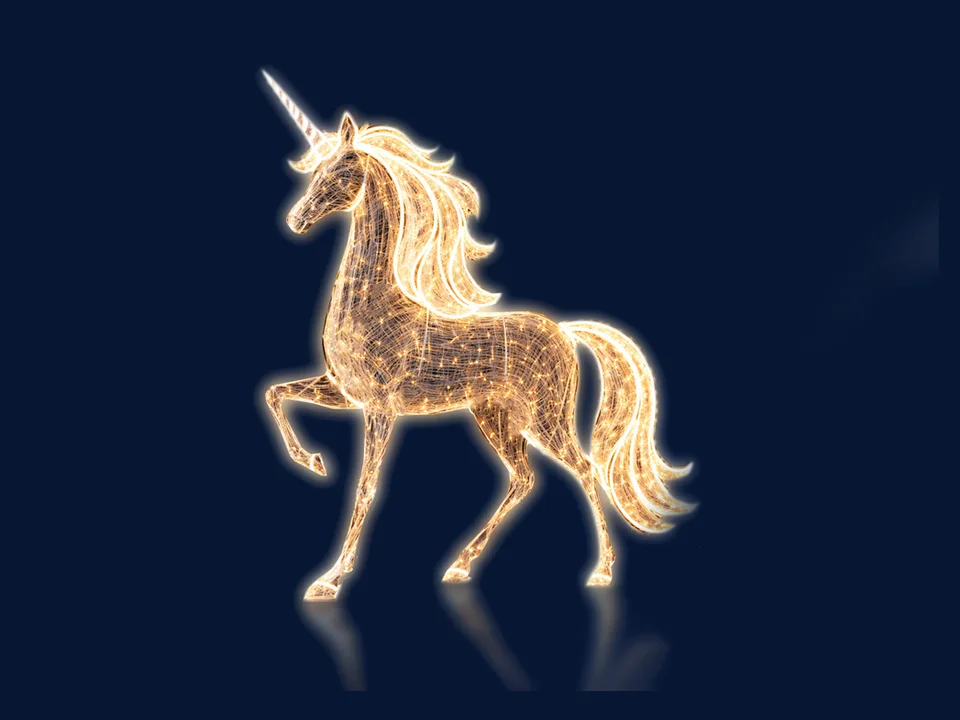 Animals93 elements
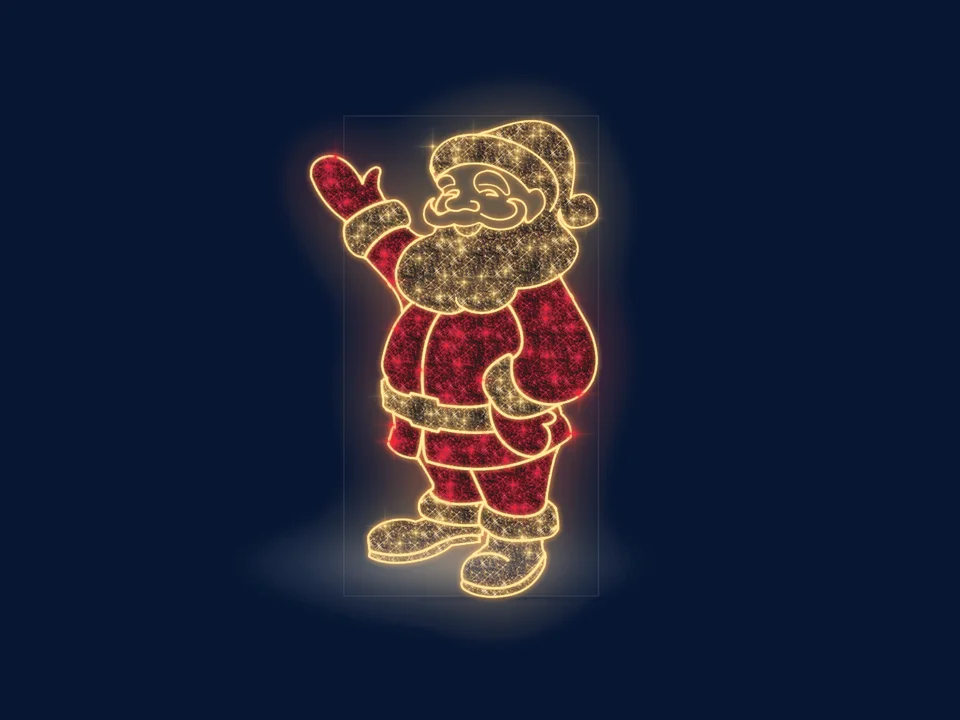 Christmas characters67 elements
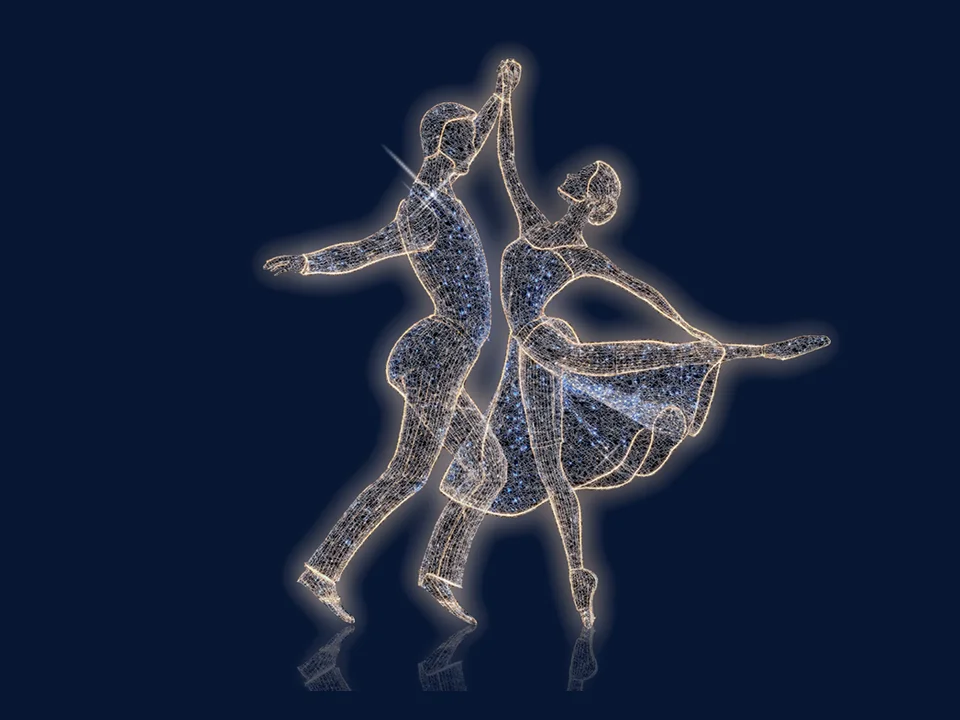 Characters32 elements
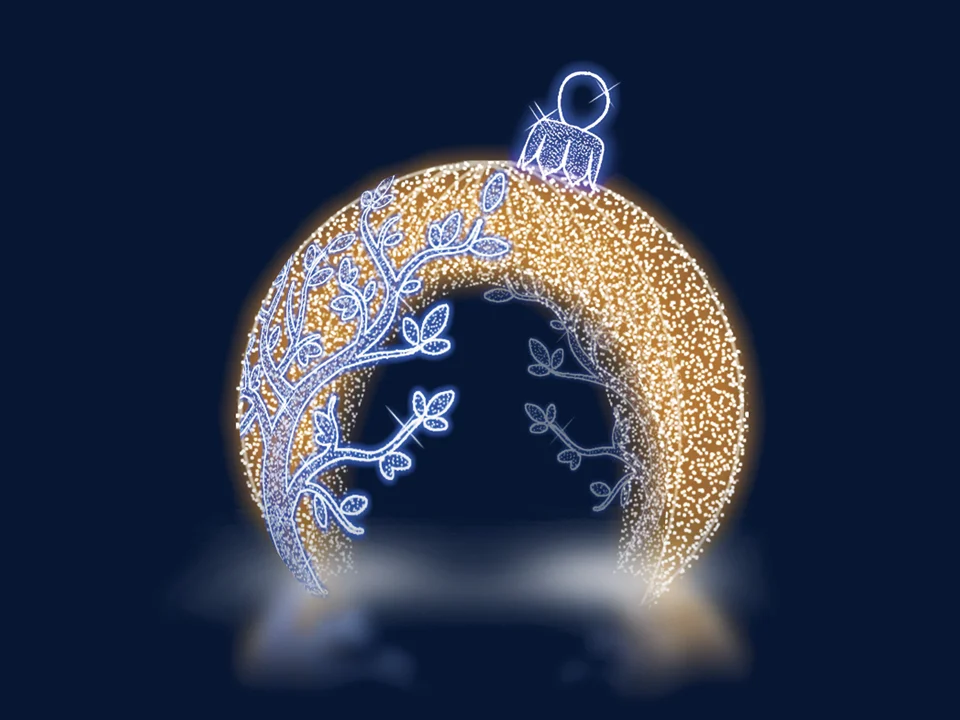 Baubles and gifts78 elements
 Arches and tunnels59 elements
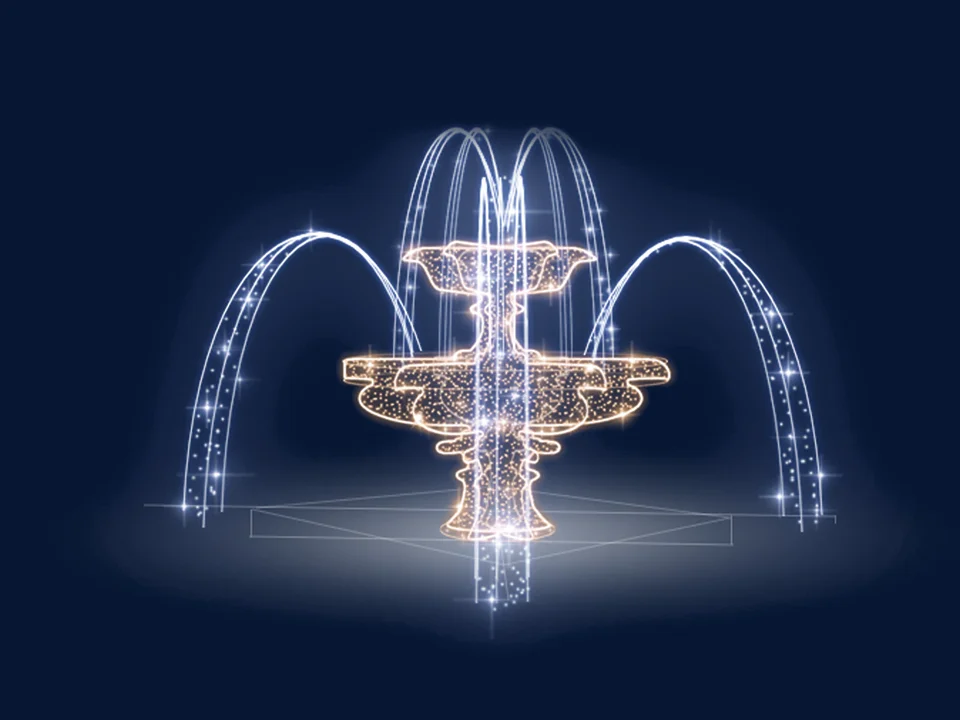 Fountains41 elements
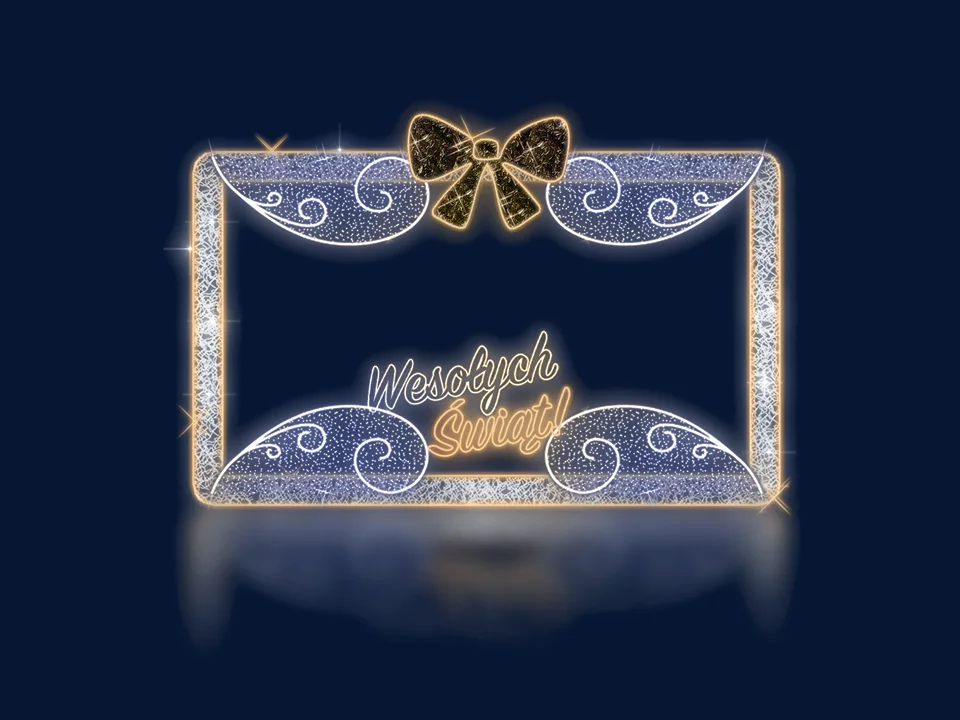 Light cards31 elements
 2D decorations28 elements
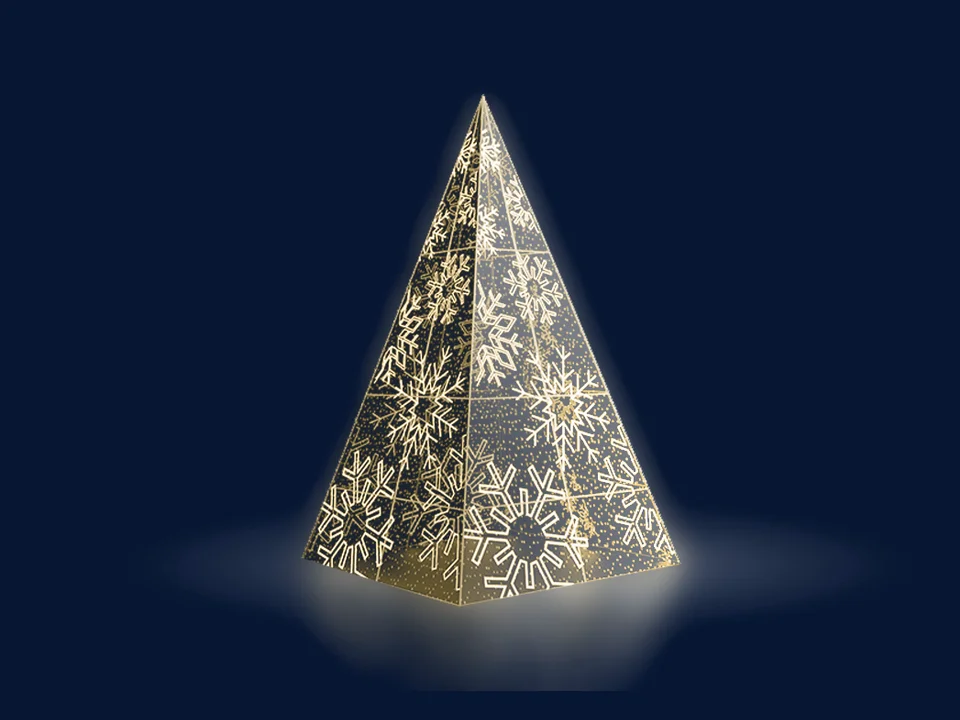 Trees on frames30 elements
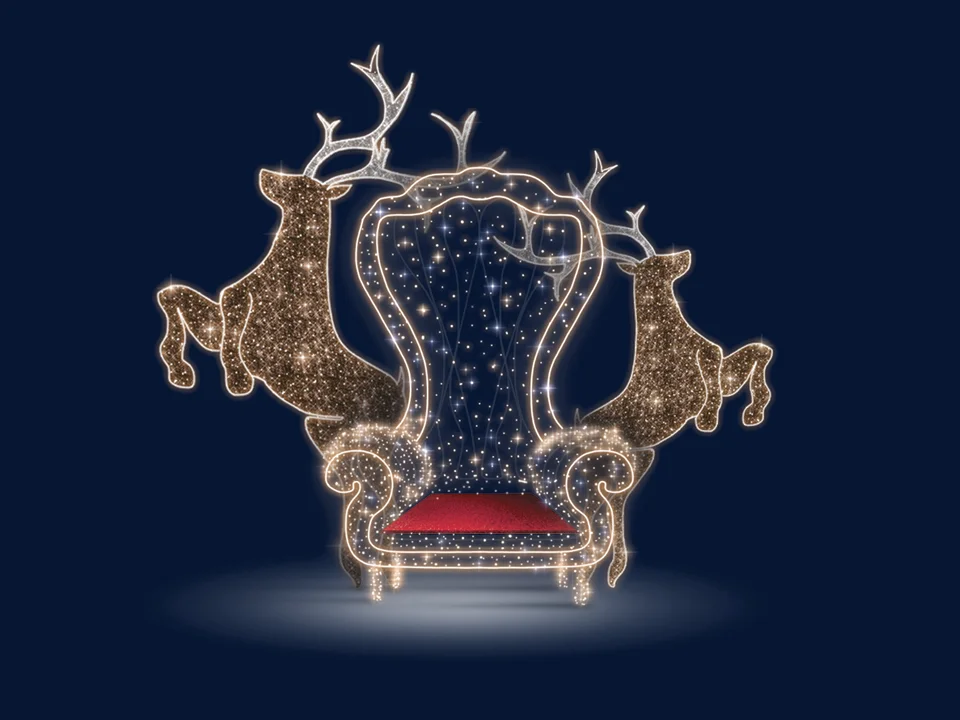 Benches and armchairs30 elements
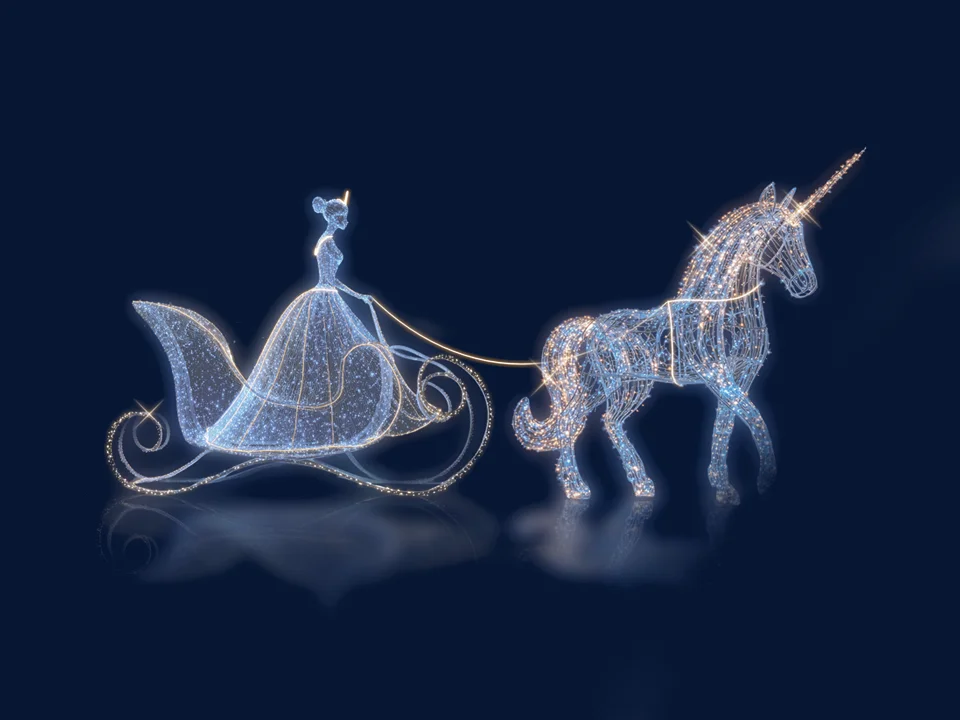 Sleighs and teams17 elements
 Flowers and trees26 elements
 Valentine’s Day13 elements
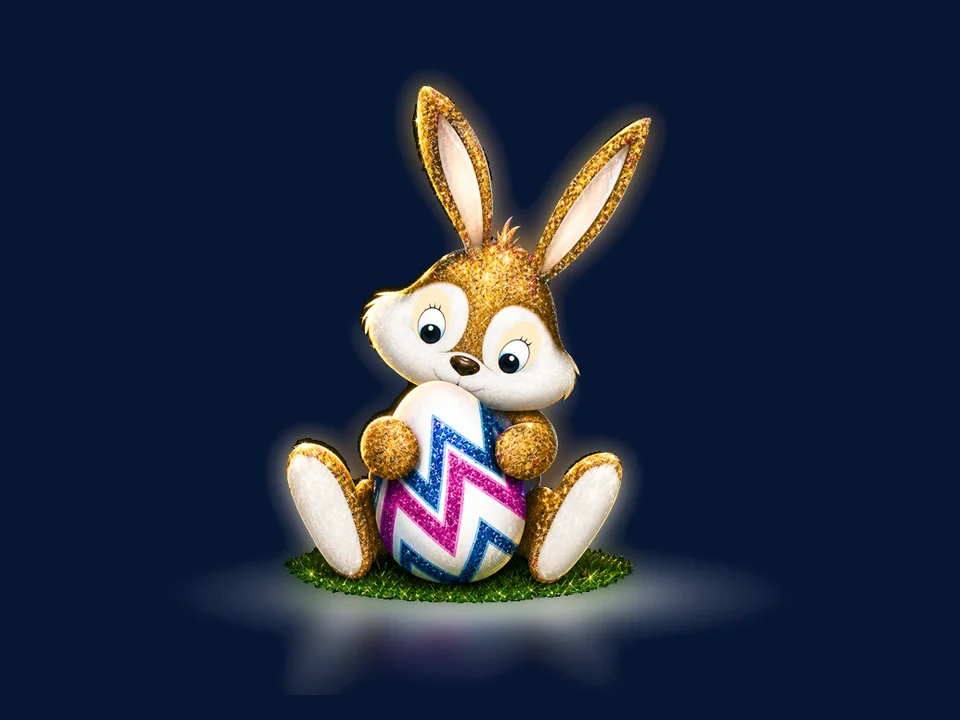 Easter11 elements
 Other101 elements
FAQ
Frequently asked questions
How is a freestanding figure fixed to the ground?
Most often on a lattice base frame. Where the ground can be drilled, we anchor the frame down; where it cannot, we weight it, for example with concrete blocks. We supply the anchors; the ballast is usually arranged by the client or the installation team. We agree the fixing method at the design stage, because it depends on the shape, dimensions and weight of the decorations on the figure, as well as on the ground itself.
Can a 3D figure be suspended instead of standing on the ground?
Standard 3D figures in this group are freestanding; 3D pole decorations are a separate case, covered under pole decorations. Lightweight 3D pieces intended to be suspended — from a ceiling, for example — are made individually to order: the deciding factors are the weight of the piece and the load the fixing point can carry. An existing design can be modified, provided the structure allows it, or we can build a new one. To give an initial assessment, we need the design and the location.
Does a large figure arrive on site fully assembled?
We do split large 3D figures, but there is no single fixed threshold — it depends on the dimensions of the particular design and on transport constraints. Splitting the structure makes it easier to transport and to store out of season. Reassembling a split figure does not strictly require our presence on site.
What power supply does a freestanding figure need?
Figures run on 230 V, and 3D decorations have a 230/36 V transformer with its own fuse. Bringing a power supply to the spot where the figure will stand is the client’s responsibility, and we will confirm the required load and protection rating in advance on request. Connecting the figure to that supply is part of the installation and is done by our installers, provided we are carrying out the installation.
Can a figure carry our logo?
Yes — we still offer personalisation, including adding your organisation’s logo to a decoration. It does affect the terms: a figure carrying your logo is sold rather than rented. We do not rent out personalised pieces, although most of our other decorations are available to rent.
Do the decorations need to be switched on manually?
No — they do not need to be switched on manually. On request, we fit a timer switch that turns the illuminations on and off at set times. Simply mention this in your enquiry, ideally with the hours during which the decorations should be lit.
How are the decorations built to withstand outdoor conditions?
The structures are built for outdoor use and designed to last for many seasons. On large batch orders, structural calculations for an individual item are carried out by an external engineering consultancy.
What happens if a decoration stops working during the season?
Our maintenance team takes the fault on: minor repairs are carried out on site, while larger faults mean the decoration comes back to our workshop. With your report, please include a photo of the damage or the symptom, the name and code of the decoration, and a short description — whether it does not light up at all, lights up only partially, or works erratically. Give us the location as well if we are to collect the decoration from the installation site.